
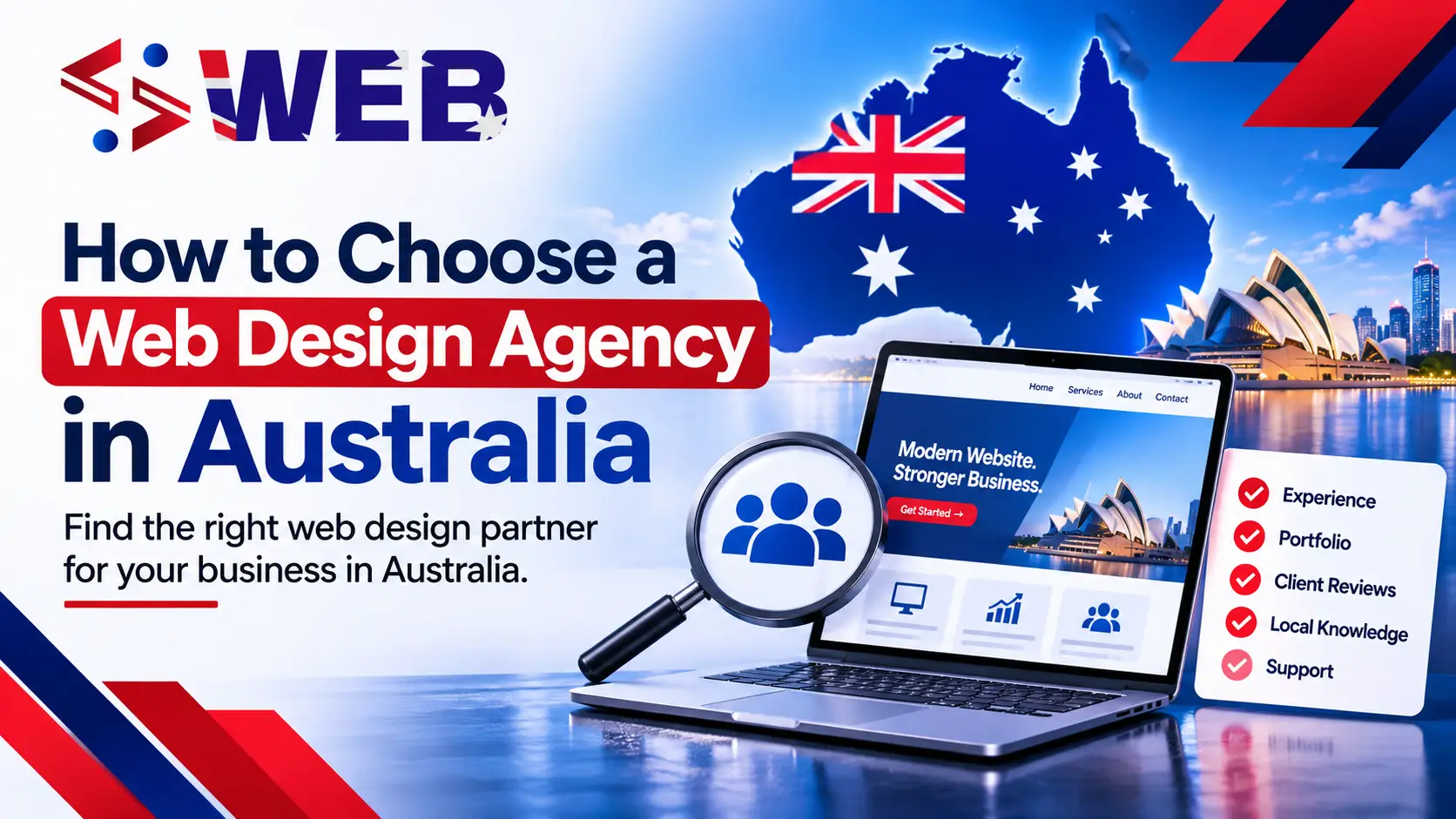
Your website is often the first thing a customer sees. If it’s slow, confusing or hard to find on Google, they’ll move on. Choosing the right agency is one of the biggest decisions you’ll make for your online presence, and most problems start with a mismatch in expectations, not bad design.
How do you choose a web design agency in Australia?
To choose a web design agency in Australia, shortlist three agencies, check their live work and real results, and ask each one the same questions. Compare written quotes by what’s included, not just the price. Confirm you’ll own your domain, hosting and content, and ask what support you get after launch.
What’s in this guide
- What a web design agency does
- Agency vs freelancer vs website builder
- Seven steps to choose an agency
- Questions to ask before you hire
- How to compare web design quotes
- Website ownership and contracts
- SEO and AI search
- Local agency or not
- Red flags
- FAQs
What does a web design agency do?
A web design agency plans, designs, builds and supports your website. The best ones start with your business goals, not with colours and layouts. They work out who your customers are, what they need to see and how to guide them to call, book or buy.
Most agencies bring several skills together: strategy, design, development, copywriting, SEO and support. Some do all of it in-house. Others partner with specialists. Either way works, as long as you know who’s responsible for what.
Web design agency vs freelancer vs website builder
The right choice depends on your budget, how complex your site is and how much time you have. Here’s a simple comparison.
| Option | Best for | Main trade-off |
| Web design agency | Growing businesses, larger sites, ongoing support | Higher cost; some outsource the work |
| Freelance web designer | Smaller projects and tighter budgets | Limited skills; delays if they get busy |
| Website builder (Wix, Squarespace) | New businesses testing an idea | Less flexibility; you do the work yourself |
| In-house developer | Large organisations with constant changes | Salary cost; reliance on one person |
If your website needs to generate leads or sales, working with a professional web development agency can be a good option. An agency can bring design, development and technical skills together to build a website around your business needs. A freelancer or website builder can still be the right choice when your requirements are simple and your budget is limited.
How to choose a web design agency: 7 steps
Step 1: Define what success looks like
Before you contact anyone, write down your top three goals in plain language. For example: more quote requests, easier bookings, or a site your staff can update themselves. Agencies can only recommend the right solution when they know what you’re trying to achieve.
Step 2: Build a shortlist of three agencies
Speaking to dozens of agencies wastes time. Three well-chosen conversations give you enough to compare. Look for agencies with relevant experience, real Australian clients and a clear process.
Step 3: Review their portfolio and case studies
A beautiful homepage doesn’t prove a site works. Open the live sites on your phone. Check that you understand what the business does within a few seconds, that the calls to action are clear and that pages load quickly.
Case studies tell you more than screenshots. A good one explains the problem, what the agency did and what changed afterwards, with dates and a source for any numbers. If every site in the website design portfolio looks the same, yours probably will too.
Step 4: Check their discovery process
Good agencies don’t jump straight to design. They ask about your customers, competitors and goals first. If someone sends a fixed price after a five-minute call, they’re guessing, and guesses often turn into extra charges later.
Step 5: Decide between custom and template
A template is a ready-made layout with your logo and colours added. Custom design is planned around your customers and goals. Templates can suit a simple site, a tight budget or a fast launch. Custom work suits businesses that need to stand out or need special features.
Step 6: Compare quotes properly
Line your quotes up on scope, not only price. The next section shows you how.
Step 7: Check what happens after launch
Websites need updates, security checks, backups and the odd fix. Ask who looks after the site, how quickly they respond and what changes cost.
Questions to ask a web design agency before you hire
Ask every agency the same questions so you can compare answers fairly. These cover the points that cause the most trouble later.
- Can I see live websites you’ve built for businesses like mine?
- What results did those clients see after launch?
- Who will design and build my site, and who will I speak to?
- Is the design custom or template-based?
- Who writes the content, and is it included?
- How do you handle SEO, redirects and site speed?
- What’s not included in the quote?
- How long will the project take, and when do you need my feedback?
- Who owns the domain, hosting and content?
- What support do you offer after launch?
Pay attention to how they answer, not only what they say. Clear examples and honest trade-offs are a good sign. Vague or overly salesy answers tell you something too.
How to compare web design quotes in Australia
Two quotes for “a website” can describe completely different projects. One might include research, copywriting, SEO setup and training. Another might cover design and development only. If you only compare the totals, you’re comparing numbers rather than value.
Check that each quote spells out the number and type of pages, whether the design is custom or template, copywriting and imagery, SEO setup and redirects, integrations such as booking tools or a CRM, testing on phones and tablets, training and support after launch. Also check whether the price includes or excludes GST, because it can change the total noticeably.
The cheapest quote is rarely the best value. A site that needs rebuilding in two years, or that nobody can find on Google, costs more in the end. If you want to understand what drives pricing before you request quotes, read our guide to website design cost in Australia.
Website ownership, domain and contracts
You should own your website. That means your domain name, hosting account and content should be registered in your name, with the agency given access to work on them. This matters if you ever want to change agencies. Some agencies keep sites on their own accounts, which makes leaving difficult.
Before signing, read the contract for ownership terms, payment stages, revision limits and ongoing fees. If you’re registering a .com.au domain, check the eligibility rules with your registrar or auDA, since Australian domains have local requirements.
Web design and SEO: what a good agency should handle
A website nobody can find is just an expensive brochure. SEO should be planned before the design starts, because page structure decides what your site can rank for.
A capable agency should be able to explain how they’ll handle your site structure, page titles and headings, internal links, mobile performance and page speed. They should also plan redirects from your old site so you don’t lose existing rankings when you move. If you serve customers in a specific area, ask about local SEO, including your Google Business Profile and consistent business details online.
Search is also changing. People now get answers from AI tools and search summaries as well as traditional results. Pages with clear headings, short direct answers to common questions and consistent business information are easier for both search engines and AI tools to understand. Ask whether the agency builds content this way.
It’s also worth asking about accessibility and privacy. Australian businesses may have obligations under the Disability Discrimination Act 1992 and the Privacy Act 1988, and WCAG is the standard commonly used as an accessibility benchmark. Ask what the agency builds to, and confirm anything specific with a legal adviser.
Should you choose a local web design agency?
Local can help, but it isn’t everything. An Australian agency is more likely to understand local tone, trust signals and buying habits, and you’ll work in the same time zone, so questions get answered quickly. If you’re in regional Australia, it also helps when the agency understands local conditions like NBN speeds and regional search habits.
That said, proof matters more than postcode. A studio in another state with strong, relevant results can beat a local one with nothing to show. If an agency claims to be local, check for a real Australian address, Australian clients and case studies.
Web design agency red flags to avoid
Watch for agencies that send a price without asking about your business, show portfolios with no context or results, or say “SEO is separate” or “we’ll sort the development later.” Be wary of vague quotes, unclear answers about who does the work and any attempt to keep your domain or hosting in their name.
The biggest warning sign is a promise of first-page Google rankings. No honest agency can guarantee that, because search results depend on many factors outside anyone’s control.
Also notice how an agency communicates before you sign. If emails are slow or answers are vague during the sales process, it rarely improves once the contract is signed.
Frequently asked questions
How much does a web design agency cost in Australia?
Costs depend on the size of the site, how much custom work is involved, the content needed and any integrations. Ask for a written quote that lists exactly what’s included and whether GST is added. Be cautious of any figure quoted without the agency first understanding your needs.
How long does it take to build a business website?
Timelines vary with the size of the site, how quickly you give feedback and whether your content is ready. Ask for a written timeline that includes dates for your approvals.
Should I choose a custom or template website?
Choose custom if you need to stand out or need special features. A template can work for a simple site, a tight budget or a fast launch, as long as it’s built well and set up for SEO.
Who should own my website and domain?
You should. Your domain, hosting and content should be in your name, with the agency given access, so you can leave at any time without losing anything.
Is a local web design agency better?
Not always. Local agencies understand the Australian market and are easy to reach, but relevant proof and clear communication matter more than location.
What should I ask for in a web design contract?
Ask for the full scope of work, payment stages, revision limits, ownership terms, timelines, support arrangements and what changes cost after launch.
The bottom line
The right agency asks good questions, shows real results, quotes clearly and keeps you in control of your own website. Take your time, ask every agency the same things and trust clear answers over big promises.